
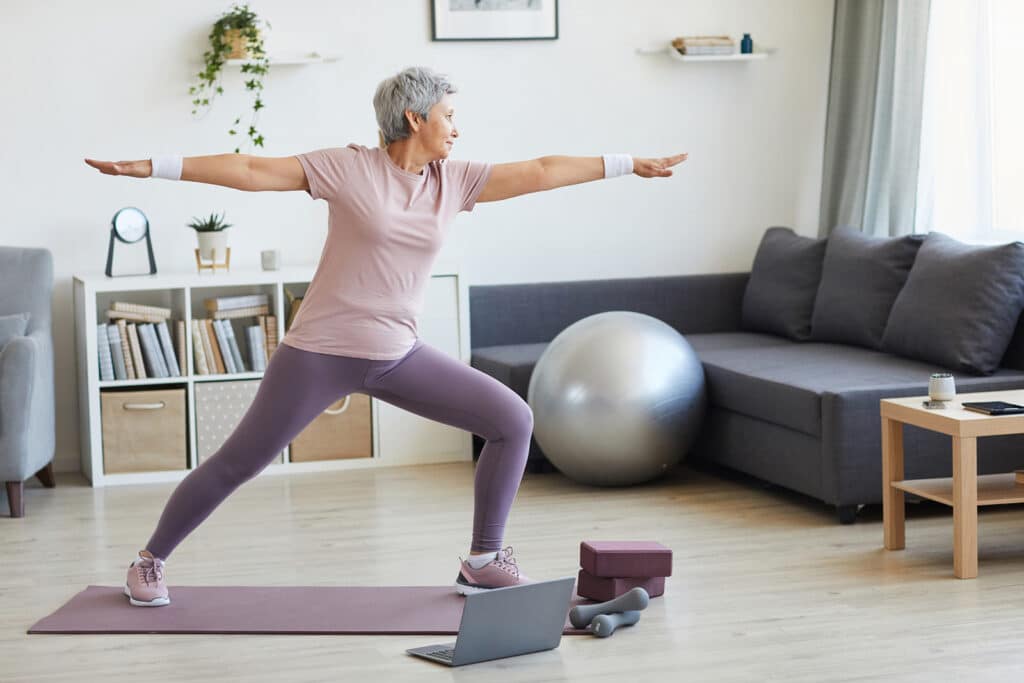

Quick Summary: Staying physically active is one of the most impactful things older adults can do for their long-term health. From stronger bones and better sleep to improved mood and sharper cognitive function, the benefits of physical activity for seniors are wide-ranging and well-supported by research. This blog breaks down eight key reasons to keep moving, and how Vitality Living makes it easier to do just that.
Staying active as we age becomes increasingly important, yet according to the National Library of Medicine, more than 37% of adults aged 65 and older engage in no leisure-time physical activity. That’s a significant number, particularly given how much regular movement contributes to overall health, independence, and quality of life.
The good news is that it’s never too late to start. Physical activities for seniors don’t need to be intense or time-consuming to deliver real results. Low-impact exercises, daily walks, group fitness classes, and gentle movement-based activities can all make a meaningful difference, and the benefits compound over time.
Here are eight benefits of staying active as you age, along with practical guidance on the types of movement that work best for older adults.
Increased Life Expectancy
Regular physical activity is one of the most reliable predictors of a longer, healthier life. Exercise reduces the risk of serious health conditions such as heart disease and stroke, but the effects of exercise go deeper than disease prevention. Research shows that consistent movement can slow the aging process at a cellular level, helping to preserve the length of telomeres, the protective caps on chromosomes that are associated with biological aging.
Even moderate activity, such as a 30-minute daily walk, has been shown to add years to life expectancy. The relationship between movement and longevity is one of the clearest in all of health research, and it holds true into older age.
Reduced Risk of Type 2 Diabetes
Physical activity plays a direct role in regulating blood sugar levels, making it one of the most effective tools for preventing and managing type 2 diabetes. Exercise helps the body use insulin more efficiently, which reduces the amount of glucose circulating in the bloodstream.
For older adults already living with diabetes, staying active can help slow the progression of more serious complications, including nerve damage, kidney disease, and cardiovascular issues. Low-impact exercises for seniors, such as walking, swimming, cycling, and resistance training, are all effective options that support blood sugar management without placing undue stress on the joints.
Reduced Risk of Depression and Improved Mental Health
The connection between physical activity and mental health is both well-established and significant. When we exercise, the body releases endorphins and neurotrophic proteins that improve mood and support the growth of new nerve cells and neural connections.
For older adults who may be navigating life transitions, loss, or social changes, regular physical activity offers a reliable and accessible way to support emotional well-being. Group fitness classes, walking groups, and other social forms of exercise add an additional layer of benefits by reducing social isolation and fostering meaningful connections, making them among the most valuable social activities available to seniors.
Stronger Bones and Better Musculoskeletal Health
Bone density naturally decreases with age, increasing the risk of fractures and osteoporosis. Regular weight-bearing and resistance-based exercise helps counteract this process by stimulating bone formation and slowing bone loss.
Beyond bone health, strength and conditioning activities improve muscle mass, joint stability, and overall balance, all of which are critical for reducing fall risk and maintaining independence. Physical activities for seniors that support musculoskeletal health include resistance band exercises, light weight training, yoga, Tai Chi, and walking on varied terrain. These don’t need to be strenuous to be effective; consistency matters more than intensity.
Healthy Weight Management
Maintaining a healthy weight becomes more challenging with age as metabolism slows and muscle mass naturally decreases. Regular physical activity helps offset these changes by increasing calorie expenditure, preserving lean muscle, and supporting metabolic function.
Unhealthy weight gain is associated with a range of serious health conditions, including heart disease, type 2 diabetes, and joint problems. One of the most practical health and wellness tips for seniors is to incorporate regular movement into daily routines—not as a short-term intervention, but as a consistent lifestyle habit. Even low-impact activity, when done regularly, contributes meaningfully to healthy weight management over time.
Better Sleep Quality
Sleep difficulties are common among older adults, and their effects on health and daily functioning are significant. Regular physical activity is one of the most effective non-pharmacological tools for improving sleep quality, both by increasing physical tiredness at the end of the day and by reducing the stress and anxiety that often interfere with restful sleep.
Studies show that older adults who engage in regular exercise fall asleep faster, sleep more deeply, and report better overall sleep quality than those who are sedentary. Low-impact exercises for seniors, such as morning walks, gentle yoga, and Tai Chi, are particularly well-suited to supporting healthy sleep patterns without overstimulating the body late in the day.
Reduced Risk of Cognitive Decline and Dementia
One of the most compelling benefits of staying active for seniors is its effect on brain health. The Alzheimer’s Society and a growing body of research support a clear link between regular physical activity, particularly aerobic exercise, and improved cognitive performance, including memory, attention, and processing speed.
Exercise increases blood flow to the brain, supports the growth of new neural connections, and may help reduce the buildup of proteins associated with Alzheimer’s disease. While physical activity is not a guarantee against cognitive decline, it is one of the most modifiable lifestyle factors associated with reduced dementia risk. Activities such as walking, swimming, dancing, and cycling all offer meaningful cognitive benefits alongside their physical advantages.
Stronger Social Connections
Social engagement is closely linked to both mental and physical health in older adults—and staying physically active is one of the most natural ways to foster it. Group fitness classes, walking clubs, community yoga sessions, and other shared movement-based activities create regular opportunities to meet new people, maintain existing relationships, and stay connected to a wider community.
For older adults, who may find that social circles naturally shrink with age, these touchpoints of connection matter enormously. The social dimension of physical activity is one of its most underappreciated benefits, and one of the strongest reasons to seek out group-based formats rather than exercising alone.
How Vitality Living Supports an Active Lifestyle
Understanding the benefits of physical activity for seniors is one thing; having the environment, support, and opportunities to act on them is another. That’s where Vitality Living communities make a meaningful difference.
Through our Vivid Life program, the Vibrant Body pillar is designed specifically to help residents stay active, mobile, and physically engaged in ways that suit their individual needs and abilities. Amenities vary by community but may include state-of-the-art fitness centers, yoga and Tai Chi classes, swimming pools, walking trails, gardening spaces, and more, all accessible right outside residents’ doors.
Just as important, our communities offer something that’s harder to find elsewhere: built-in motivation. With neighbors, friends, and programming designed to make movement social and enjoyable, staying active becomes a natural part of daily life rather than a solitary obligation.
Whether you’re just beginning to prioritize physical activity or looking for a senior living community that supports an already-active lifestyle, Vitality Living is designed to meet you where you are. Discover a Vitality Living community near you to schedule a tour, or learn more about our Vivid Life program and what daily life looks like day to day.