

Quick Summary: Keeping the brain active supports memory, focus, and overall cognitive health as we age. Puzzles, reading, creative hobbies, lifelong learning, and social engagement all help strengthen neural connections and slow cognitive decline. Consistency is key—incorporating a variety of mentally stimulating activities into daily routines makes a meaningful, lasting difference.
As we age, maintaining mental sharpness becomes just as important as caring for physical health. Staying engaged, curious, and connected can play a significant role in supporting overall well-being. For older adults, incorporating activities that challenge the mind is a powerful way to support cognitive health for seniors and promote a more fulfilling daily life.
The good news is that keeping the brain active doesn’t have to be complicated. From puzzles and reading to social interaction and creative hobbies, there are many ways to stay mentally active. By making these activities part of a daily routine, seniors can support memory, improve focus, and enhance overall quality of life. Learn more in this article from Vitality Living.
Why Does Cognitive Engagement Matter?
Cognitive engagement becomes increasingly important with age, as the brain benefits from regular stimulation just like the body benefits from physical activity. Engaging in brain exercises for older adults can help strengthen neural connections, support memory retention, and improve problem-solving skills.
Without regular mental stimulation, cognitive decline may occur more quickly. However, research shows that staying mentally engaged can help slow this process and support long-term brain health. Activities that challenge thinking, encourage learning, and promote interaction all contribute to stronger cognitive function.
For families wondering how to boost memory, the answer often lies in consistency. Incorporating a variety of stimulating activities into everyday life can help maintain cognitive abilities while also providing enjoyment and a sense of accomplishment.
Puzzles and Brain Games
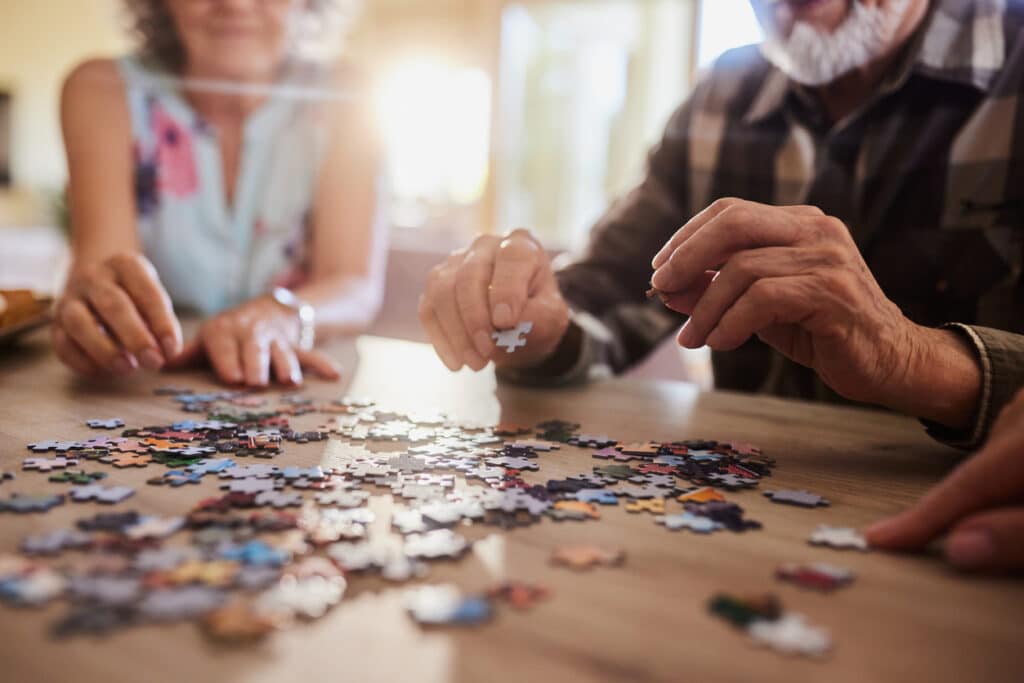
Puzzles and games are some of the most accessible and effective brain exercises for older adults. These activities challenge memory, logic, and problem-solving skills while providing a sense of achievement.
Popular options include:
- Crossword puzzles and word searches
- Sudoku and number games
- Jigsaw puzzles
- Card games and board games
These types of memory care activities for seniors are especially beneficial because they can be adapted to different skill levels, making them both engaging and enjoyable. Completing puzzles regularly helps reinforce cognitive skills and encourages focus and concentration.
Reading and Lifelong Learning
Reading is a simple yet powerful way to support cognitive health for seniors. Whether it’s books, newspapers, or magazines, reading helps stimulate the brain, improve vocabulary, and encourage critical thinking.
Beyond reading, lifelong learning opportunities, such as attending lectures, taking classes, or exploring new topics, can further enhance mental engagement. Learning something new, like a language or a new skill, challenges the brain in unique ways and helps build new neural connections.
For those looking for ways to stay mentally active, dedicating time each day to reading or learning can make a meaningful difference in cognitive health over time.
Music, Creativity, and Expression
Creative activities are another powerful way to support brain health. Music, art, and other forms of self-expression stimulate multiple areas of the brain at once, making them especially beneficial for memory and emotional well-being.
Examples include:
- Listening to music or singing along to favorite songs
- Playing an instrument
- Painting, drawing, or crafting
- Writing or journaling
These activities are often included in memory care activities for seniors because they can trigger memories, improve mood, and encourage self-expression. Music, in particular, has been shown to help individuals recall memories and connect with emotions, even in later stages of cognitive decline.
Social Engagement and Connection
Staying socially active is one of the most important ways to support both mental and emotional health. Conversations, shared experiences, and group activities all help stimulate the brain and reinforce memory.
Participating in memory care activities for seniors that involve social interaction, such as group games, discussions, or community events, can help reduce feelings of isolation while promoting cognitive engagement.
Social connections also provide emotional support, which plays a key role in overall well-being. Whether it’s spending time with family, joining a club, or participating in community programs, these interactions help individuals stay mentally active while building meaningful relationships.
Everyday Habits That Support Memory
In addition to structured activities, small daily habits can support brain health. For those wondering how to boost memory, consistency in daily routines is key.
Helpful habits include:
- Staying physically active with regular movement
- Maintaining a balanced, nutritious diet
- Getting enough sleep each night
- Practicing mindfulness or relaxation techniques
- Keeping a daily schedule or using reminders
These habits work alongside brain exercises for older adults to support overall cognitive function and long-term wellness.
Supporting Cognitive Health in Senior Living
Senior living communities play an important role in supporting cognitive health for seniors by providing structured opportunities for engagement, learning, and connection.
At Vitality Living, residents benefit from a vibrant senior living lifestyle that encourages lifelong learning and mental stimulation. Through our Vivid Life program, residents can participate in activities designed to support cognitive, physical, and emotional well-being. These programs include group discussions, creative workshops, educational opportunities, and interactive games that help residents stay mentally active each day.
For those needing additional support, Vitality Living Memory Care communities offer specialized programming tailored to individual needs. These memory care activities for seniors are designed to promote dignity, encourage engagement, and support cognitive function in a structured and compassionate environment.
Embracing Lifelong Mental Wellness
Supporting brain health is a lifelong journey, and it’s never too late to start. By incorporating engaging activities, maintaining social connections, and building healthy daily habits, seniors can continue to grow, learn, and thrive.
Whether it’s solving a puzzle, learning something new, or simply spending time with others, each moment of engagement contributes to stronger cognitive function and a higher quality of life.
At Vitality Living, we’re committed to helping residents embrace every stage of life with purpose and connection, providing the tools, programs, and support needed to maintain a healthy mind and a fulfilling lifestyle. Contact our team today to learn more about our senior living communities and offerings.