

You’ve spent decades building a life filled with experiences, relationships, and routines that matter to you. What if the next chapter held even more possibility? Not smaller, but more expansive. Not slower, but more rewarding.
That’s the promise of active adult living, and it’s one that more than a million Americans 55 and older are already living out. Whether you’re exploring active adult communities for the first time or just curious about the active adult lifestyle options available to you, this guide covers everything: the science behind why community matters; the best fun activities for adults that actually support your health; and the travel, purpose, and connection that define carefree living at its best.
Why Where You Live Shapes How Well You Age
Here’s something the real estate listings don’t tell you: moving to an active adult community may be one of the most important health decisions you make. The research is clear—social connection, purposeful activity, and regular movement are the three most powerful predictors of healthy aging. And 55+ active adult communities are specifically designed to deliver all three under one roof.
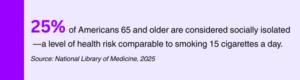
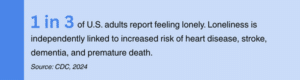
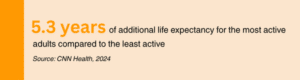
What does this mean realistically? It means that the built-in social calendar, the daily fitness classes, the neighbors you share meals with—these aren’t amenities. They’re a form of medicine and wellness. The National Institute on Aging puts it simply:
“People who engage in meaningful, productive activities with others tend to live longer, boost their mood, and have a sense of purpose.” — National Institute on Aging (NIA)
Additionally, many residents moving into senior living communities are single, which is a reminder that an active adult lifestyle community is uniquely positioned. It’s not just a place to rest your head. It’s a place to find genuine connection, friendship, and even new love during a chapter of life that can otherwise feel isolating.
That’s where daily community life comes in and makes all the difference. The activities you choose, including how you move, connect, and engage, play a direct role in how well you age. The right activities don’t just fill your schedule—they help you stay strong, sharp, and connected. Continue reading to discover activities you can make your own. You might just find a new favorite along the way.
The Activities That Keep You Strong, Sharp, and Social
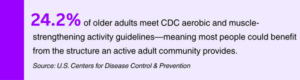
The CDC recommends at least 150 minutes of moderate aerobic activity per week plus muscle-strengthening twice weekly for adults 65+. Here’s how to make every minute count—and enjoy it.
Aerobic Activities You’ll Forget Are Workouts
- Tennis is an outstanding aerobic and balance workout. Free public courts are easy to find in most communities, or join a club for lessons and to meet partners at your skill level. All you need to start is a racquet and a decent pair of shoes.
- Pickleball has become the fastest-growing sport in America for good reason. It combines the best of tennis, badminton, and ping pong on a smaller, friendlier court. Lower impact than tennis, endlessly social, and surprisingly competitive once you catch on. Visit usapickleball.org for complete rules and to find courts near you.
- Walking is the one activity every expert agrees on. Its benefits for both physical and emotional health are unquestionable, it requires nothing but a pair of shoes, and it can be done alone or in a group. Research consistently shows that even light-to-moderate walking is associated with lower rates of chronic disease and reduced mortality.
- Bicycling is a low-impact, practical active adult activity. Bike paths in most communities let you exercise, run errands, and visit friends—all while logging meaningful aerobic time. Don’t forget your helmet!
- Water Aerobics is ideal if you have knee or joint issues. As a low-impact aerobic activity, it delivers a serious workout without the wear. Most active adult communities with a pool include water aerobics classes weekly, making it a refreshing, effective, and social activity to add to your schedule.
- Ballroom Dancing qualifies as a moderate-intensity activity under CDC guidelines, which makes it doubly valuable for older adults. It’s also one of the most social activities to participate in on a week-to-week basis. Classes are widely available for different skill levels; a quick search for “adult activities near me” will almost certainly highlight options in your area.
Strength and Balance: The Unsung Heroes of Healthy Aging
Aerobic exercise gets most of the attention, but strength training and balance work might be the most important activities for adults 65 and older. Strength training builds muscle and keeps bones healthy, directly reducing the risk of falls and associated injuries. The CDC recommends a minimum of 30 minutes twice per week, and you can start with nothing more than a pair of light hand weights or resistance bands.
Balance activities are equally essential. A fall that leads to a hip fracture is one of the most common events that disrupts an older adult’s independence, and most falls are preventable with consistent balance training. Yoga, Tai Chi, and simple single-leg exercises can all be done at home with little or no equipment.
And golf deserves a mention of its own: research has shown that an 18-hole round delivers at least the recommended 10,000 daily steps. It’s the most expensive sport on this list, but it’s also among the most sociable, and it plays well at every skill level.
Why Exercise Is a Brain Game, Too
Both aerobic and resistance training activities can help improve cognitive function in older adults. Research published in JAMA Network Open found a direct dose-response relationship between physical activity and reduced cognitive decline. The CDC explicitly recognizes regular physical activity as a tool for reducing the risk of dementia, including Alzheimer’s disease. The best exercise, though? The kind you’ll actually enjoy doing.

The World Is Still Waiting—Travel Ideas for Active Adults
One of the most tangible benefits of active adult living is freedom from the obligations of homeownership. No lawn to mow. No maintenance list staring you down. Just time—and the world waiting to be explored. Here are some of the best travel experiences for active older adults, organized by what excites you most.
For Nature and Wilderness Lovers
- The American West: Home to some of the most breathtaking landscapes on Earth. The Grand Canyon, Yellowstone, Yosemite, Bryce Canyon, and Zion are all within reach. Plus, bus tours and Amtrak routes have built national park itineraries specifically for travelers who want guidance without sacrificing flexibility.
- An Alaskan Cruise: Another bucket-list experience—sail through Glacier Bay and the Inside Passage from Seattle or San Francisco, then depart for shore excursions to highlights like Denali National Park. It’s an adventure with the comfort of returning to a floating hotel every night.
- The Great Smoky Mountains: At the Tennessee–North Carolina border, the mountains offer some of the most accessible wilderness in the country. The park is home to more than 2,000 plant species and wildlife, including black bears, elk, and deer. Nearby towns like Gatlinburg, Asheville, and Pigeon Forge offer everything from rustic cabins to luxury hotels, with attractions like the Biltmore Estate and Dollywood rounding out the visit.
- New England: The fall foliage season is similarly spectacular. Maine, New Hampshire, and Vermont turn into a painter’s canvas each season. Bus and train tours are even designed specifically for peak-color viewing windows.
For Beach Seekers and Sun Chasers
- South Florida: Sunny Florida delivers warm, sunny beaches from spring through fall on both coasts. From Cocoa Beach and Daytona Beach on the Atlantic to Clearwater, Siesta Key, and Sanibel Island on the Gulf. Plus, multiple international airports put almost every South Florida beach within easy reach.
- The Caribbean Islands: Offering year-round sun and warm breezes, a cruise is the most efficient way to visit multiple islands in one trip. Top destinations include the Bahamas, Antigua, Barbados, and Nevis.
- California’s Famous Highway 1: Deserving of a road trip of its own, drive from Los Angeles through Big Sur, Monterey Bay, and across the Golden Gate Bridge, then detour through Sonoma and Napa wine country.
For Culture Lovers and Festival-Goers
- European River Cruises: Float through the Danube and Rhine in Germany, the Douro in Portugal, and the Seine in France, all while your hotel moves with you. Most operators even include pre- and post-cruise city extensions to see even more sites during your trip.
- Oktoberfest, Munich: Mid-September through early October, this famed event draws in more than six million annual visitors. Early bookers are rewarded with an experience unlike anything else in the world. Consider a specialist tour operator for additional accommodations and VIP access.
- Christmas Markets: Vienna, Salzburg, Prague, Cologne, and Strasbourg transform their historic squares into enchanting winter wonderlands—best experienced December through mid-January.
For History Lovers and Heritage Travelers
- Colonial Virginia: Colonial Williamsburg and Jamestown bring America’s founding era to life with immersive, living-history experiences unlike anywhere else in the country.
- Philadelphia’s Historic District and Boston’s Freedom Trail are self-guided classics with sites such as Independence Hall, the Liberty Bell, Faneuil Hall, and the Freedom Trail. Both cities offer hop-on/hop-off trolleys and buses to make sightseeing genuinely effortless.
- Civil War Tennessee: From Spring Hill to Nashville, the state preserves a remarkable breadth of Civil War sites, battlefields, and museums for those who want to walk where history happened.
Traveling with Family
Multigenerational travel creates memories that span decades. For school-age grandchildren, consider renting a vacation house for a week or taking a cruise—both give everyone their own space to decompress, and the dinner table becomes the place where real connection happens.
For college-age grandchildren, a big-city trip or international adventure with just the two of you can be transformative. Leaving their parents at home allows them to show up differently and creates memories that will last a lifetime.
How Staying Purposeful Adds Years to Your Life
The most fulfilling retirements aren’t just active, they’re meaningful. Research from the NIA consistently shows that people who engage in meaningful, productive activities live longer and maintain better cognitive health than those who don’t. The question isn’t whether to stay engaged. It’s how.
Volunteer Opportunities for Active Seniors
- Mentoring, Tutoring, and Coaching: These may be the highest-leverage use of your experience. A local school, youth sports league, or vocational program can connect you with young people whose trajectories you can genuinely alter. Your decades of accumulated wisdom and patience are exactly what they need, and what they often can’t get anywhere else.
- Food Banks and Homeless Shelters: These opportunities offer hands-on ways to make an impact. Serving meals, sorting donations, and distributing food items shows you the immediate difference you can make in your own community—and helps keep things in perspective.
- Animal Shelter Volunteering or Fostering: This is one of the more quietly rewarding volunteer experiences available. Care for a dog or cat recovering from injury, clean kennels, or assist with feeding, walking, and socializing. The unconditional affection you receive back is its own kind of therapy, and seeing an animal go on to a good home is something you’ll never forget.
- Faith-Based Mission Trips: These trips offer an opportunity to combine purpose, community, and travel. Most denominations organize domestic and international trips for retirees. Talk to your congregation’s leadership about what’s available and what might suit your schedule and calling.
Creative Pursuits Worth Trying
Retirement is the first time in most people’s lives that they have the time and freedom to pursue creative interests seriously. A few worth exploring include:
- Writing: Always wanted to write a memoir or novel? Anyone can self-publish today, but writing well takes practice. Your local library almost certainly hosts or knows of a writers’ group. Online workshops, genre-specific associations, and author conferences offer structure and community for all levels and are often accessible from the comfort of your living room.
- Choir and Music: Whether you sang in school or only in the shower, a church choir or community ensemble offers a warm welcome and a structured, social way to rediscover your voice with dedicated weekly rehearsals.
- Community Theater: Classes are widely available for adults of all experience levels. As you build confidence, you may audition for a real production, creating life-long friendships across generations along the way. Search for community theatres and senior theatre programs in your area to get started.
- Cooking Classes: Supermarkets, community colleges, and businesses often offer a variety of casual classes, from Italian cooking to crème brûlée workshops. Or platforms like Cozymeal let you cook live with a professional chef from your own kitchen through video calls. These are fun options to add variety to your weekly routines.
Choosing the Right Active Adult Community for You
Everything in this guide—the fitness, the travel, the friendships, the purpose—flows more naturally when your environment is designed for it. That’s the core value of an active adult lifestyle community: it removes the friction. No maintenance. No isolation. No wondering what’s on the schedule this week.
At Vitality Living, we’ve built communities across the South and Southeast with exactly that in mind. Our team of seasoned retirement-living professionals carries more than 200 years of combined experience and one shared conviction: the senior living industry must evolve. We challenge every perception, eliminate aging stereotypes, empower resident choice, and design environments where every person can thrive regardless of physical or cognitive challenges.
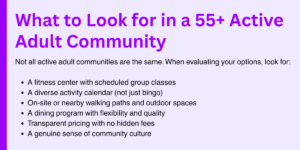
If you’re researching active adult communities for yourself or a parent, the best first step is always a visit. No brochure or guide—including this one—can substitute for walking the halls, talking to residents, and feeling whether a place matches the life you’re imagining. We’d love to show you what carefree living looks like in person.
Your Best Chapter Starts Now
From Victoria, TX, to Arlington, VA, and everywhere in between, Vitality Living communities are places where active adult living isn’t a category—it’s a way of life. Discover a Vitality Living active adult community near you and schedule a tour to see firsthand what makes our communities so welcoming.
Our knowledgeable team is here to answer your questions, walk you through your options, and help you explore whether active adult living is the right next step for you or a loved one. From lifestyle and amenities to pricing and availability, we’re here to provide guidance and support so you can make a confident, informed decision. Reach out to us today with any questions you may have, and take the first step toward an active adult lifestyle that feels right for you.