
Quick Summary: Cognitive health is one of the most important and most actionable areas of healthy aging, and the lifestyle choices that support it are well within reach for most older adults. This blog covers what the research says about brain health for seniors, how sleep, nutrition, physical activity, and social connection work together to protect cognitive function over time, and how Vitality Living’s Vivid Life program brings these principles to life.
For most people, brain health doesn’t become a conscious priority until something prompts it. A moment of forgetfulness that lingers a little too long, a news story about dementia, or maybe a parent’s diagnosis that suddenly makes the question of aging and memory loss feel personal.
But the research on cognitive wellness makes a compelling case for starting earlier and being more intentional than most of us tend to be. The habits and lifestyle choices that support long-term brain health are not complicated or dramatic. They’re the same things that support physical health, emotional well-being, and quality of life: sleep, nutrition, movement, social connection, and mental engagement.
What makes them worth examining through the lens of brain health is the evidence that each plays a distinct, measurable role in how the brain ages, and together they are far more protective than any factor alone.
Why Cognitive Health Becomes a Growing Priority As We Age
When it comes to aging and memory loss, there is an important distinction between the normal cognitive changes of aging and the kind of progressive decline associated with Alzheimer’s disease and other forms of dementia. The former is expected and manageable. The latter, while influenced by genetics, is also significantly shaped by modifiable lifestyle factors.
Research from The Lancet identified twelve modifiable risk factors that together account for approximately 40 percent of global dementia cases. These include physical inactivity, social isolation, smoking, excessive alcohol consumption, obesity, high blood pressure, depression, hearing loss, and low levels of education and cognitive engagement.
That number is worth sitting with. It means lifestyle and environmental factors play a much larger role in the prevention of cognitive decline than most people realize. It also means the choices older adults make today about how they sleep, eat, move, and connect matter for their long-term brain health.
Sleep: The Foundation of Cognitive Wellness
Sleep is one of the most underappreciated tools for supporting brain health in seniors, and its connection to cognitive function runs deeper than most people realize. Most of us think of sleep as rest, but for the brain, it’s active maintenance. During deep sleep, the brain works to clear out waste and harmful proteins that accumulate during waking hours, including some of the same proteins associated with Alzheimer’s disease.
The good news is that improving sleep quality doesn’t require dramatic changes. Aim for seven to nine hours per night, keep a consistent sleep schedule, and limit caffeine in the afternoon and evening—all straightforward habits that make a real difference. A cool, dark sleeping environment also helps the body settle into a deeper, more restorative sleep. If frequent waking, insomnia, or suspected sleep apnea is a concern, speaking with a doctor is always the best next step.
Nutrition and Brain Health: What You Eat Matters
The link between nutrition and brain health is more direct than most people realize, and small, consistent dietary changes can make a meaningful difference over time.
The MIND diet is one of the most researched dietary approaches for brain health. It combines key elements of the Mediterranean and DASH diets and has been linked to slower cognitive decline in older adults, even with partial adherence. The focus is simple: more greens, berries, whole grains, fish, beans, nuts, and olive oil, and less red meat, butter, cheese, and fried food.
A few individual nutrients are also important to pay attention to:
- Omega-3 fatty acids from fatty fish support brain cell health and reduce inflammation
- B vitamins help protect against cognitive decline
- Antioxidants from colorful fruits and vegetables reduce cellular stress that speeds up brain aging and memory loss
And don’t overlook hydration; even mild dehydration can noticeably affect attention and short-term memory.
Physical Activity: One of the Most Powerful Tools for Cognitive Protection
When it comes to keeping your brain sharp as you age, physical activity is one of the most direct, evidence-based answers. Exercise increases blood flow to the brain, supports new neural connections, and reduces inflammation, all of which support long-term cognitive health.
Regular aerobic exercise has been shown to support the hippocampus, the brain region most associated with memory and one of the first areas affected by Alzheimer’s disease. Walking, swimming, dancing, cycling, yoga, and tai chi all offer cognitive benefits alongside their physical ones, and resistance training also shows promise for supporting focus and processing speed.
The threshold for benefit is lower than most people assume. Thirty minutes of moderate activity on most days of the week is consistently associated with meaningful cognitive protection. Getting started is more important than getting it perfect.
Social Connection: Why Isolation Is a Brain Health Risk
Social connection is often treated as a quality-of-life concern rather than a health one, but the research tells a different story. Chronic isolation and loneliness have been identified as significant risk factors for cognitive decline, and the reasons make intuitive sense: regular conversation, shared experiences, and group participation all provide the kind of mental engagement that supports brain health in ways that are easy to underestimate.
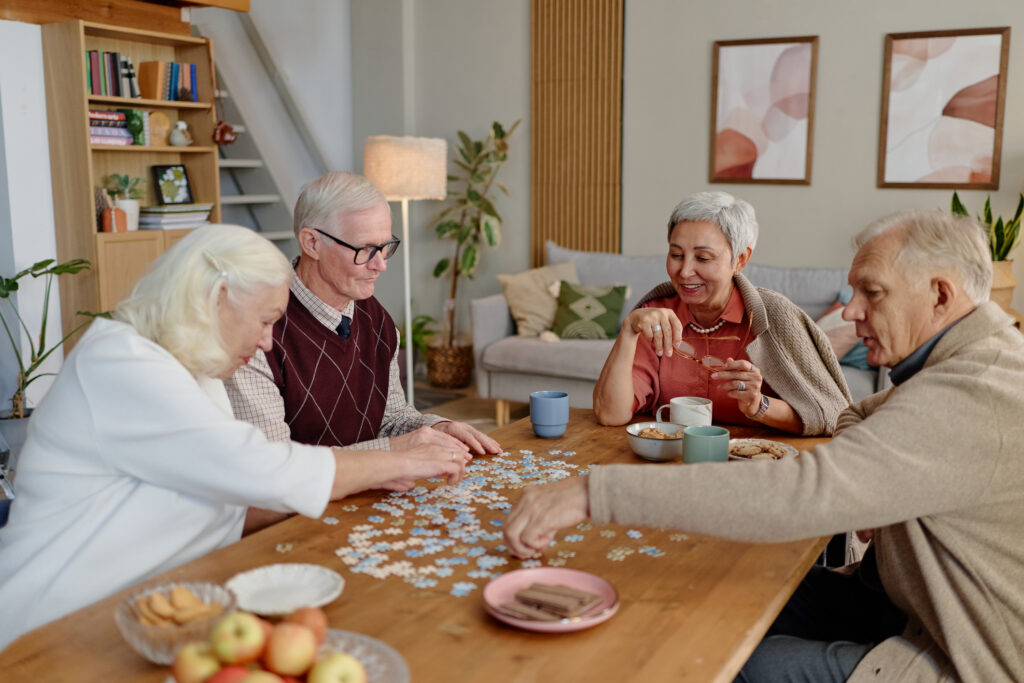
This is one of the reasons the Vibrant Connections pillar of Vitality Living’s Vivid Life program is designed the way it is. Group outings, resident-led clubs, intergenerational programs, and community events aren’t just social opportunities. They’re a meaningful part of how the community supports cognitive health every day.
Mental Stimulation: Brain Exercises for Seniors
The principle of “use it or lose it” applies to the brain as much as to the body. Activities that challenge the mind, require learning, or engage multiple cognitive systems at once seem most protective for long-term brain health.
Brain exercises for seniors that fit this description include learning a new language or instrument, taking up a creative pursuit like painting, writing, or pottery, playing strategy-based games, and engaging in educational programs or discussions on unfamiliar topics. What matters most is the element of novelty and challenge. Familiar activities provide less cognitive benefit than those that require real mental effort and learning.
For a closer look at specific activities and the research behind them, our blog on brain-boosting activities for seniors is a good read.
Managing Stress and Emotional Well-Being
Chronic stress is one of the more overlooked contributors to cognitive decline, and managing it is a meaningful part of any brain health strategy. Sustained stress produces elevated cortisol levels that, over time, have been linked to impaired memory and increased vulnerability to neurodegenerative disease. Not all stress is harmful, but the chronic, unmanaged kind is worth taking seriously.
The practices that support stress reduction overlap closely with everything else covered in this blog. Mindfulness meditation, regular physical activity, adequate sleep, strong social connection, and engagement in purposeful activities all help regulate stress while simultaneously supporting the prevention of cognitive decline.
How to Keep Your Brain Sharp as You Age: A Practical Daily Framework
For older adults looking for a concrete starting point, here is a practical framework that brings together the evidence-based habits covered in this blog:
Every day
Drink water consistently throughout the day, eat at least one serving of leafy greens and one serving of berries or colorful fruit, take a 30-minute walk or participate in another form of moderate physical activity, spend meaningful time in conversation or social connection with others, and protect a consistent sleep schedule.
Several times per week
Eat fatty fish or other omega-3 rich foods, engage in brain exercises for seniors that challenge you in a novel way, whether that’s a strategy game, a creative project, or learning something new, and participate in a group activity that combines social engagement with mental or physical stimulation.
Regularly
Schedule and attend annual check-ups that include blood pressure, cholesterol, hearing, and vision assessments, all of which are connected to cognitive health. Review medications with your doctor for any that may affect cognitive function or sleep. And stay engaged with a community, whether through a faith group, a volunteer role, a class, or a senior living community, that provides consistent structure and meaningful connection.
How Vitality Living Supports Brain Health Every Day
Knowing what supports brain health is one thing. Building it into daily life consistently is another, and this is where a thoughtfully designed senior living community makes a real difference.
At Vitality Living, the Vivid Life program brings the lifestyle factors that support cognitive wellness into a structured, accessible daily experience. The Vibrant Brain pillar addresses cognitive engagement through visiting lectures, creative arts, lifelong learning, and mindfulness programming. The Vibrant Body pillar supports physical activity, which is directly linked to brain health, through fitness classes, walking clubs, yoga, and tai chi. The Vibrant Connections pillar ensures meaningful social engagement is woven into daily life rather than left to chance.
Residents also benefit from chef-prepared dining that supports nutrition and comfortable, well-designed residences and community areas that promote healthy daily routines.
Find a Vitality Living community near you to learn more or schedule a tour.