


Most families start their search with a preconceived notion of what “senior living” means, often shaped by a single image or story rather than the full picture. It’s usually not until the time comes to consider how to choose the right senior living community for yourself or a loved one that the actual range of options comes into view.
In reality, there’s a full spectrum of levels of senior care, including independent living, assisted living, memory care, Continuing Care Retirement Communities, and at-home care. Each one is built for a different combination of independence, health needs, and lifestyle. Knowing in advance what each option means and who it’s best suited for makes both the immediate decision and the ones that follow down the road much easier.
This guide breaks down the different senior living options, including what’s included, what it costs, and who it’s designed for, along with how to evaluate a specific community, how to pay for care, and how to work through the decision with the person it affects most.
Why the Old Picture of Senior Living Is Outdated
Historically, retirement has been defined with rocking chairs, slow mornings, and quiet days. That picture still colors how a lot of people approach this decision, but it doesn’t match how most older adults are actually living today. Older adults are traveling, taking up new hobbies, achieving exercise milestones, and more.
According to a research study that followed 2,268 older adults aged 60 or more years, “Being socially engaged doesn’t just help older adults feel better. It also makes them feel younger and helps them live longer.”
Participants with higher levels of social engagement had a biological age that was almost four years younger than their actual age, on average. — Journal of the American Geriatrics Society
At the same time, the risks of aging without the right support are real and well documented. According to the CDC, falls are the leading cause of injury among older adults.

By comparison, staying active and connected tends to support a healthier picture of aging. Socially engaged seniors show roughly half the memory loss of their more isolated peers, and regular exercise is linked to a lower risk of death in older adults.
Isolation carries its own risks, too: loneliness has been found to be about twice as unhealthy as obesity for people over 50. Together, these findings point to the same conclusion: connection, activity, and the right level of support aren’t just nice to have—they’re closely tied to how well someone ages.
That’s the real argument for rethinking senior living: it’s not a compromise on quality of life. Quite the opposite—when done well, it’s an upgrade to it, and, in many cases, a meaningful safeguard against the risks that come with aging alone.
Understanding Your Senior Living Options
When it comes to how to choose the right senior living community, you’ll need to honestly evaluate what you or your loved one needs today and where those needs are likely headed. Here’s how each level of senior care breaks down.
Independent Living
Independent living is built for older adults who want to trade homeownership headaches for a maintenance-free, socially rich lifestyle. This lifestyle change isn’t because they need help, but because they’d rather spend their time on people and passions instead of gutters and grocery runs. Residents typically live in private apartments, villas, or cottages and enjoy access to shared services and amenities that enhance their daily life.
Independent living often includes:
- Chef-prepared dining options
- Housekeeping and linen services
- Maintenance and landscaping services
- Scheduled transportation
- Fitness centers and wellness programming
- Social events and outings
While independent living doesn’t provide daily medical care, it offers convenience, connection, and peace of mind. Many residents choose this option to downsize, reduce stress, and enjoy a built-in social network as a proactive lifestyle choice rather than a care-driven decision.
Nationally, independent living carries a median cost of about $3,200 per month, according to A Place for Mom’s 2026 Cost Report.
Assisted Living
Assisted living is a type of care for seniors that bridges the gap between independence and full-time care. It’s designed for individuals who may need help with certain activities of daily living but still want to remain as independent as possible.
Assisted living support may include:
- Medication management and reminders
- Assistance with bathing and dressing
- Mobility and transfer support
- Dining assistance
- Personalized care plans
One of the key benefits of assisted living is flexibility. Residents maintain private living spaces while having access to professional, around-the-clock support. Care plans are personalized and adjusted as needs change, and most communities layer in dining, housekeeping, transportation, and enrichment classes on top of care.
Nationally, assisted living carries a median cost of about $5,419 per month, though it can range from roughly $4,000 to $11,000 or more depending on the state, according to A Place for Mom’s 2026 Cost Report.
Memory Care
Families often begin their search by asking, what is memory care, and how does it differ from other levels of care for seniors?
Memory care is a specialized environment for people living with Alzheimer’s disease or other forms of dementia. These communities are thoughtfully designed to address cognitive changes, behavioral shifts, and safety concerns that accompany memory loss.
Memory care typically provides:
- Secure environments with controlled access
- Structured daily routines to reduce confusion
- Specialized dementia-trained caregivers
- Cognitive-focused programming and therapies
- Smaller, more intimate living environments
- Enhanced safety features

Beyond physical safety, memory care prioritizes emotional well-being. Predictable routines, calming environments, and compassionate communication techniques help reduce anxiety while preserving dignity and abilities for as long as possible. This level of support reassures families that their loved one’s unique needs are understood and met.
Families and loved ones can expect:
- Secure environments with controlled access
- Structured daily routines that reduce confusion and anxiety
- Dementia-trained caregivers and cognitive-focused programming
- Smaller, more intimate living environments and enhanced safety features
In 23 states, memory care units are legally required to disclose the specific services they provide, so it’s worth asking directly what’s included. Memory care also comes at a higher price than standard assisted living, with a national median cost of about $6,690 per month, according to A Place for Mom’s 2026 Cost Report.
Continuing Care Retirement Communities (CCRCs)
A Continuing Care Retirement Community (CCRC) offers multiple senior living options within one community or network. Residents can transition between levels of senior care such as independent living, assisted living, and memory care as their needs evolve without leaving the community they’ve grown to know and love. It’s an appealing senior living option for couples with different care needs, or for anyone who wants one long-term plan instead of several future moves.
CCRC benefits often include:
- A comprehensive plan for aging in place
- Seamless transitions between care levels
- Familiar surroundings, even as needs change over time
- Predictable long-term planning
Most CCRCs operate on a rental model, though some offer a buy-in option for a specific unit. In either case, residents typically pay an initial entry fee that covers routine and long-term care costs, on top of a monthly fee. Because CCRCs involve a significant, long-term financial commitment, some communities won’t accept residents with a pre-existing neurodegenerative condition like Alzheimer’s or Parkinson’s, so it’s worth asking about admission criteria before you fall in love with a campus.
CCRCs can reduce the stress of future moves and allow couples with differing care needs to remain close to one another. They may be some of the priciest senior living options, but it’s important to remember that all present and future care needs are taken care of. Entrance fees average around $400,000 nationally (with a range from roughly $100,000 to over $1 million), on top of an average monthly fee of about $3,353, according to Care.com’s 2026 cost report.
Skilled Nursing
For around-the-clock medical care, skilled nursing communities keep doctors, nurses, and aides on-site continuously. They’re designed for residents with significant or complex medical needs—recovering from surgery or a hospital stay, managing a chronic condition, or requiring more hands-on care than assisted living or memory care can provide. Most skilled nursing communities also include occupational, physical, and speech therapy alongside enrichment activities, so the goal is to slow the progression of chronic conditions and support recovery, not just manage day-to-day needs.
Because of the intensity and levels of senior care involved, skilled nursing is typically the most expensive senior living option. Nationally, a semi-private room runs a median of about $9,277 per month, with private rooms costing more, according to A Place for Mom’s 2026 Cost Report.
At-Home Care
At-home care allows older adults to remain in their current residence while receiving outside support. Services can range from occasional assistance to full-time skilled nursing.
In-home services may include:
- Personal care assistance
- Meal preparation
- Medication reminders
- Physical therapy or skilled nursing
While aging in place offers familiarity, families should consider practical factors, such as home safety modifications, caregiver scheduling consistency, social isolation risks, and long-term financial sustainability. For some, transitioning to a senior living community may offer more comprehensive support, daily engagement, and predictable costs. Understanding how at-home care compares to community-based care is an important step in evaluating the full spectrum of types of care for seniors.
At-home care typically costs a median rate of about $34 per hour, according to A Place for Mom’s 2026 Cost Report.
What to Look for in a Community
When narrowing down senior living options, care level is just one part of the equation. Culture, communication, and overall quality of life play an equally important role.
Community Culture
A community’s atmosphere often reveals more than brochures or a senior living guide ever could. A strong community culture is warm, welcoming, and respectful. Residents should feel known as individuals, not just as care recipients, and that mindset tends to show up in everything else—how staff treat residents day to day, how included residents feel in their own routines, and how quickly someone new starts to feel at home.
Look for signs of laughter, participation, and genuine connection, and keep culture in mind as you compare communities, since the right fit often matters just as much as the right level of senior care.
Personalized Support
No two residents have identical needs, which is why individualized care plans are essential. Ask how assessments are conducted and how frequently care plans are updated. Quality communities will develop tailored care plans upon move-in, regularly reassess needs, communicate openly with families, and adapt services as health changes occur. Personalized support like this ensures residents maintain as much independence as possible while receiving the right amount of assistance, one of the most important factors when evaluating the different levels of senior care.
“Older adults who move into senior living receive more healthcare services from care providers in their home compared to older adults who live in the community, including more primary care services and more visits from specialty providers such as podiatrists, psychiatrists, and cardiologists.” — National Investment Center for Seniors Housing & Care
Lifestyle and Engagement
Engagement is a defining characteristic of modern senior living. Today’s communities prioritize holistic wellness, supporting physical, cognitive, emotional, and social well-being through diverse and thoughtfully planned activities, such as fitness classes for various mobility levels, creative arts and music programs, educational workshops, group outings and excursions, intergenerational activities, and volunteer or purpose-driven opportunities.
These activities foster connection, reduce isolation, and promote overall health and well-being. A vibrant activity calendar helps residents build friendships, maintain abilities, and experience meaningful moments every day. When evaluating communities, ask how programs are adapted for different levels of care for seniors and how participation is encouraged for all residents.
Preparing For Your Senior Living Search
Once you’ve narrowed your options down to a few communities worth a closer look, a little preparation goes a long way. Knowing what to ask, what to look for, and who to talk to helps you walk into every conversation with confidence.
Ask Lots of Questions
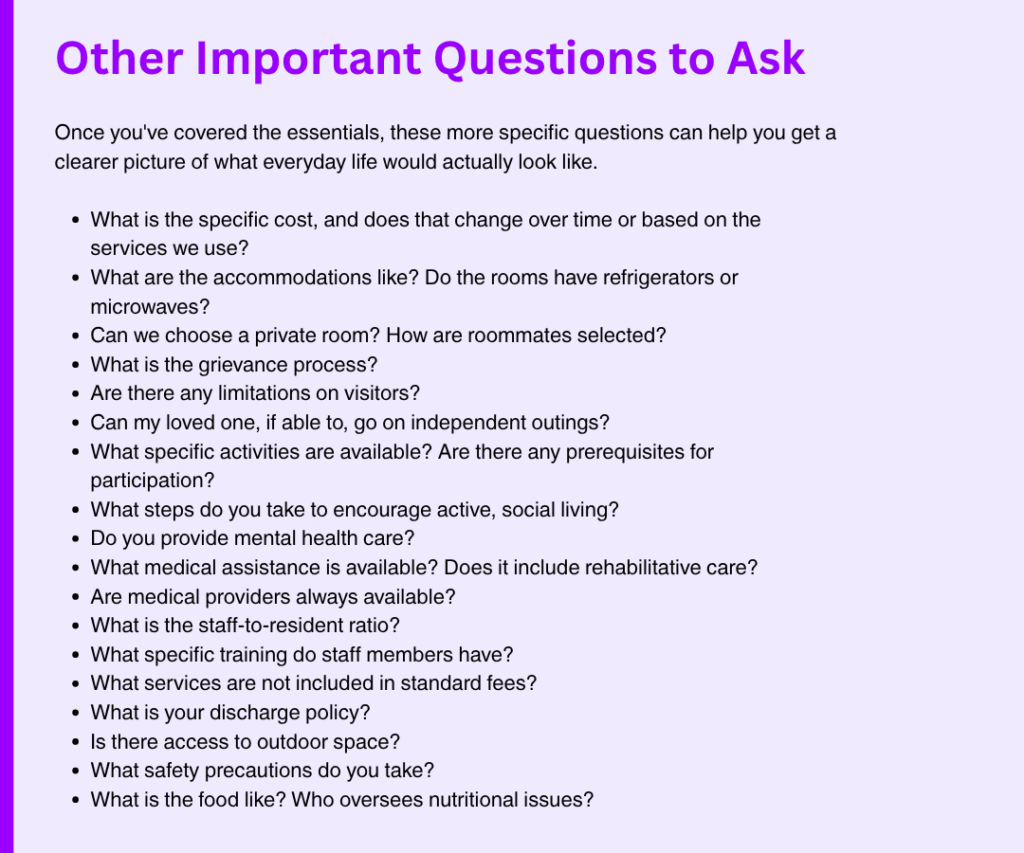
A quality community should be comfortable answering just about any question you bring to a tour or conversation, and most are genuinely happy to talk through the details. After all, they want you to feel confident in your decision as much as you do. If a community seems hesitant or vague when you ask about specifics, it’s worth paying attention to, since that kind of reluctance can be a sign there’s something they’d rather you not look into too closely. Coming prepared with a solid list of questions helps you compare communities and makes sure nothing important slips through the cracks. Ask about:
- Who owns and manages the community, and how stable the leadership team has been over time
- Whether they can share their latest state survey results, along with any resident, family, or staff satisfaction feedback
- How costs are structured, and whether they change over time
- What the staff-to-resident ratio looks like, along with medical availability and access to mental health support
- What isn’t included in the standard fee, and what the discharge process looks like if care needs change
Tour the Community—More Than Once
A tour is your best chance to get a real feel for daily life in a community. Walk the halls, sit in on an activity, and stay for a meal if you can. Pay attention to the little things that add up to a good impression: a clean, well-kept space, team members who greet residents warmly and by name, and residents who look engaged and comfortable. Those details tend to say more about day-to-day life there than any brochure or senior living guide could. Consider:
- Cleanliness: How does the community smell? Is there visible dirt and grime, or is it sparkling clean?
- Team member behavior: Are the team members friendly? How do they behave toward residents?
- Activities: Are people out socializing, or is everyone retiring to their rooms?
- Outdoor communities: Are the outdoor areas attractive and secure?
- Safety: Does the community appear safe? Are there hazards, such as kitchen knives, left where residents could grab them?
- Food: Eat a meal at the community and consider its taste and nutritional value.
- Resident appearance: Are the residents clean and well-groomed? Or do they spend their days in bathrobes? This is the best window into the quality of personal care and grooming you can expect.
It’s worth touring at more than one time of day, too, if you can. A community can look and feel very different at 10 a.m. during a lively activity than it does at 4 p.m. or over a weekend, when staffing may be lighter and the pace slower.
Read Reviews and Ask for References
References and online reviews are a great way to round out what you learn on a tour, offering a window into what daily life is really like from people who’ve already lived it. Most families are happy to share their experience, and their honest take, including both the highlights and the trade-offs, can be reassuring and enlightening as you narrow down your choices.
When you do speak with references, it helps to ask a few open-ended questions rather than simply “did you like it?” We recommend asking:
- What do you like most about the community?
- What do you like least about the community?
- Do you have any tips for choosing a community?
- What one thing do you wish you had known when you made your decision?
- If you could change one thing about the community, what would it be?
Families who’ve already been through this decision tend to be generous with their time and candid in their answers, and that perspective can surface details a brochure or senior living decision guide never will.
Talking to a Loved One About the Transition
Bringing up senior living for the first time can feel daunting, even when everyone involved wants the same thing: for your loved one to be safe, happy, and supported. A little intention in how the conversation unfolds can make a real difference in how it lands.
A few things that help:
- Start early, and start small. A relaxed conversation well before any decision is urgent gives everyone room to think, ask questions, and revisit the topic over time rather than tackling it all at once under pressure.
- Ask before you suggest. How do they picture their next few years? What matters most to them—staying near friends, keeping a garden, having their own kitchen? Understanding what they want makes it easier to find an option that actually fits.
- Lead with what they’d gain. Senior living often means more, not less: more company, fewer chores, and help with the things that have started to feel like a burden, such as home upkeep or maintenance. Framing it around what opens up tends to land better than framing it around what’s being given up.
- Be honest, always. Even with a cognitive diagnosis, misleading a loved one erodes trust. Explain things clearly and gently, and be willing to explain them again.
- Make it a conversation, not an announcement. A dialogue that leaves room for their questions, concerns, and pushback tends to build more trust than one that arrives as a decision already made.
Making the Decision Together
Once you’ve narrowed the search to a shortlist of communities, the final stretch is really about experiencing them together. Plan visits where everyone can see the apartments, sit in on an activity, and share a meal in the dining room—the kind of firsthand experience that turns a list of bullet points from a senior living guide into a real sense of what daily life would actually feel like there.
Take your time with this part. It’s worth revisiting a top choice more than once, at different times of day, and giving everyone room to sit with their impressions before committing to the transition. Talk openly about what stood out, such as a favorite view, a friendly team member, or an activity that looked fun, as well as anything that gave you pause. The goal is a choice everyone feels good about, and arrived at together, rather than one person deciding for the group.
Paying for Senior Living Options
For a lot of families, cost is the question that looms largest over this whole process, and it’s an understandable one. The good news is that senior living options are more within reach than most people assume, thanks to a wider range of funding options than you might expect. Understanding what’s available and starting that conversation early often opens up choices that weren’t obvious at first glance.
VA Aid & Attendance
Veterans and surviving spouses have access to one of the more generous, and more overlooked, benefits available: a tax-free pension add-on called Aid & Attendance. It’s designed for those who need help with daily living tasks, are bedridden, or have significant visual impairment, and it can meaningfully offset the cost of care.
As of 2026, maximum monthly rates run roughly $1,453 for a veteran alone, $1,903 for a veteran with a spouse, and $974 for a surviving spouse. This is real money that can go a long way toward covering care.
Long-Term Care Insurance
For families thinking ahead, long-term care insurance is one of the most efficient ways to plan for the future: a relatively modest investment now can cover all or a meaningful part of care costs down the road, often making a big difference in what senior living options are affordable when the time comes. The one catch is timing—it needs to be purchased while a person is still healthy, since it’s no longer an option once care is already needed. If a move feels years away, this is exactly the kind of thing worth discussing sooner rather than later.
Home Equity Loans
A home equity loan, sometimes called a “second mortgage,” provides access to a lump sum of cash based on the equity already built up in the home. For families facing significant costs for various types of care for seniors, combining home equity from a few sources—a parent, an adult child, a sibling or two—can turn an otherwise out-of-reach option into a workable one. Since the loan does need to be repaid, it’s worth budgeting for those payments ahead of time, and any unpaid balance becomes the estate’s responsibility. If preserving an inheritance is part of the picture, an estate attorney can help you think through how a loan might affect that.
Selling a Life Insurance Policy
An existing life insurance policy can also become a resource for levels of senior care. Through a process called a “life settlement,” a policyholder can sell a policy, typically one valued above $50,000, for less than its full face value, but for considerably more than they’d get by simply surrendering it. The buyer takes over future premium payments, and the proceeds are often placed in an irrevocable trust that pays the community directly, giving families a clear, dedicated funding source for care.
Selling a Home or Other Property
Selling the family home is often the most straightforward way to access a significant amount of funding at once, and tends to make the most sense when there’s no spouse remaining who needs to live there. It’s worth approaching thoughtfully, since a sale can affect the size of an eventual inheritance and can carry real emotional weight for a loved one who has lived there for years. Senior real estate specialists and transitional specialists can make the process smoother, helping stage the home and get the strongest possible sale price.
Reverse Mortgage
A reverse mortgage is a type of home equity loan available to homeowners 62 and older. Unlike a traditional loan, there’s no need to repay the balance until the borrower moves out or sells the home, which makes it a flexible option if a spouse is still living there or if in-home care is part of the plan. When the home is eventually sold, the loan is repaid from the proceeds; if it isn’t sold, the estate becomes responsible for repaying the balance, or the lender may take possession of the home.
Medicaid and Medicare
Medicaid can be a valuable resource for families with more limited assets. Because it generally requires demonstrating these limited assets, it often makes sense as part of a longer-term plan rather than a first step. Many families explore other senior living options first and turn to Medicaid once those resources have been used.
Medicare, meanwhile, plays a narrower but still useful role: it covers up to 100 days in a Medicare-certified community following a qualifying hospital stay, though it doesn’t extend to independent or assisted living.
Knowing where each program fits into the bigger picture helps families build a funding plan that holds up over time.
Discover the Vitality Living Difference
There’s no single “right” senior living option; only the one that fits the life your family is building next. Whether that’s an independent living apartment with a full social calendar, an assisted living community that fills in the gaps with care, a memory care neighborhood built for comfort and safety, or something in between, the goal is the same: a place where the person you love gets to keep being exactly who they are.
That’s the idea behind every Vitality Living community. We don’t just manage care. We get to know residents as people, learn what makes them light up, and build a life around that. A shared laugh over coffee. A hobby picked back up after years on the shelf. A friendship that turns an ordinary Tuesday into a joyful memory. That’s what we mean by living well, and it’s what we aim for every single day.
The best way to know if a community is right for your family is to see it for yourself. If you’re ready to explore your options or want guidance on how to choose the right senior living community, we’re here to help. Schedule a tour and spend an afternoon with us meeting the team, talking with residents, and getting a real feel for what daily life looks like. However you’re approaching this decision, we’re here to help you move forward with confidence, and we’d love the chance to show you what’s possible.