


Where do we start? What should we look for? How will we know when we’ve found the right community?
Wondering how to choose senior living that fits your family’s needs? You’re in good company. Choosing a community is one of the most meaningful decisions a family makes together, and it’s normal for older adults and their loved ones to feel a little overwhelmed at first. There are priorities to sort out, a budget to build, and communities to compare. The good news is that you don’t have to figure it all out at once.
This guide walks you through how to choose a senior living community step by step, from defining priorities and comparing costs to touring with confidence, so you can choose the right senior living community for yourself or someone you love.
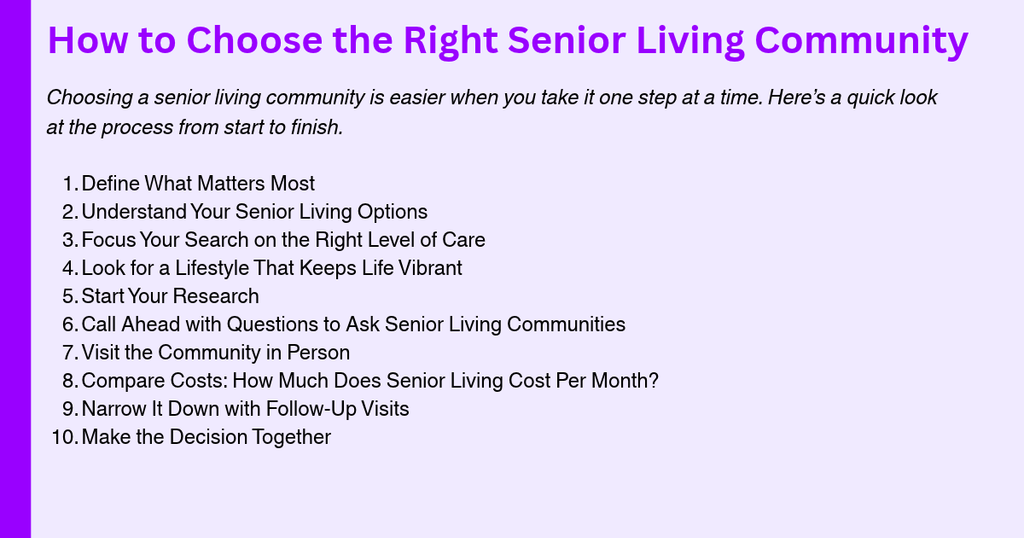
Step 1: Define What Matters Most
Before you look at a single brochure, start with a conversation. Some factors are necessities, like the right level of care or a cost that fits the budget. Others are wants, like a walking trail or a full social calendar. Make two lists, “must-haves” and “nice-to-haves,” and let them guide every call and visit that follows.
At Vitality Living, our mission is to create vibrant communities where residents, families, and team members can be themselves, live purposefully, and experience a profound sense of belonging. We believe senior living is a choice made not just on need, but on want. In independent living, that means a carefree lifestyle with no home repairs to worry about. In assisted living and memory care, it means knowing that support with daily activities, meals, engagement, and safety is already in place. When wants and needs come together, you can feel confident the choice is the right fit.
Location
Does your loved one want to stay near their current home and familiar neighborhood, or move closer to you or someone they love? Location is often one of the first decisions families make, especially when loved ones are spread across the country.
A few things to consider: If your loved one moves closer to family, what happens if that family member later relocates? If they stay in their neighborhood, are friends, faith communities, and favorite places still nearby? In either case, consider each community’s access to physicians, specialists, and hospitals.
Care Options
Choose a community that fits your loved one’s needs today and where those needs may be headed. A community that offers independent living, assisted living, and memory care is often considered ideal because it can prevent another move down the road. Moving is a big change at any age, so planning for tomorrow’s needs today can spare your loved one, and your family, a second transition later on.
Lifestyle
Every community has its own personality. Some are formal, others casual. Does your loved one love dressing up for dinner, or are they happiest in jeans and sneakers? Cultural fit matters as much as the floor plan, and it’s often what makes a new place start to feel like home.
Safety and Security
States regulate many safety features, such as grab bars, emergency call systems, and hallway handrails, but others, like fire suppression systems, carbon monoxide alarms, and disaster plans, vary by community. Ask what each has in place and how the team plans for and handles potential security concerns.
Services and Amenities
The services and amenities a community offers directly shape day-to-day quality of life. Staples at most communities include personal care assistance, housekeeping, meals, transportation, and home maintenance. Others vary by community, such as life-enrichment programming, an on-site beauty or barber shop, resident garden plots, pet-friendly policies, and wellness programs. Be realistic about what your loved one wants and needs, then match that list to what each community actually offers.
Budget
Money can be an uncomfortable topic, especially in families that don’t usually talk about finances. Still, a clear, realistic budget is one of the most helpful tools you can bring to your search. There are a variety of ways to pay for senior living, but setting your budget early and sticking to it keeps the process focused and far less stressful.
Step 2: Understand Your Senior Living Options
Not every community offers the same services, so understanding your options before you start makes it much easier to narrow the list. Here’s a quick look at the most common types of senior living.
- Independent Living: Designed for older adults who are independent but want freedom from the responsibilities of home maintenance, and are looking for a more social lifestyle.
- Assisted Living: Ideal for those who want to maintain their independence while receiving support with activities of daily living, such as bathing, dressing, or medication management.
- Memory Care: Specialized support, safety, and structure for people living with Alzheimer’s or other forms of dementia, offered as a dedicated community or a distinct neighborhood.
- Respite Care: Short-term stays that give family caregivers a chance to rest while their loved one receives professional support. It’s also a low-pressure way to experience community life firsthand and see whether it feels like the right fit.
Once you know which level of care fits, revisit your must-have list. Location, price, and amenities often look different once you know exactly what type of community you’re searching for.
Step 3: Focus Your Search on the Right Level of Care
Once you know which type of senior living fits, dig into the details. Each level of care comes with its own questions and, often, its own emotions. Here’s what to look for and ask about for each.
How to Choose the Best Independent Living Community for Seniors
Independent living is more of a lifestyle choice than a care decision, so the right community is one where your loved one’s interests, routines, and friendships can flourish. Look closely at the activity calendar, dining options, and fitness and wellness programs, and notice whether residents seem genuinely engaged. Keep the future in mind, too: Can the community add support if needs change?
Questions to ask when choosing independent living:
- What’s included in the monthly fee, and what costs extra?
- What does a typical week on the activity calendar look like?
- Are there resident-led clubs, outings, or volunteer opportunities?
- Is transportation available for appointments and errands?
- If care needs change, are assisted living or memory care available on the same campus?
- What are the policies on pets, guests, and personalizing an apartment?
The emotional challenges of choosing independent living communities for families often catch people by surprise. Your loved one may worry that moving means giving up independence, while loved ones may feel guilty for even raising the subject. It’s understandable to feel that way. But in practice, many residents find that independent living gives them more freedom, not less: no lawn to mow, no repairs to schedule, and more time for friends and favorite pursuits. Keeping the conversation focused on what your loved one gains, and letting them lead the decision, makes the decision easier for everyone.
How to Choose a Reliable Assisted Living Community
When it comes to how to choose assisted living, reliability comes down to consistent, personalized care delivered by a stable, well-trained team. Look for thorough move-in assessments, individualized care plans that are reviewed regularly, transparent pricing for each level of care, and low team turnover. Notice whether residents look well-groomed, comfortable, and engaged, since that’s one of the clearest windows into the quality of daily care.
A few questions to consider asking every assisted living community:
- How is a resident’s care plan created, and how often is it reassessed?
- Can we see your most recent state inspection results?
- How long have your caregivers and leadership team been here?
- How are care costs structured, and what happens to pricing if needs increase?
- When and how often do you communicate with families?
Choosing Memory Care with Confidence
The emotional challenges of choosing memory care for families can feel heavy, and guilt is common. But choosing memory care isn’t giving up. It gives your loved one a safe environment and specialized support, and it lets you spend time together as a family again instead of being a full-time caregiver.
63 million Americans, roughly one in four adults, are family caregivers today, a 45% increase over the past decade — AARP & National Alliance for Caregiving
Quality memory care goes beyond secure doors. Look for predictable daily routines that reduce confusion, smaller and calmer living spaces, dementia-trained caregivers, and programming that draws on each resident’s history and interests. The goal is to preserve your loved one’s dignity and abilities for as long as possible.
Questions to ask when choosing memory care:
- What dementia-specific training do team members receive?
- How is the memory care neighborhood secured, and how do residents move about safely?
- What does a typical daily routine look like, and how is programming adapted to different abilities?
- How does the team respond to anxiety, agitation, or sundowning?
- How are families kept informed about changes in health or behavior?
- What is the team-to-resident ratio during the day and overnight?
How to Choose Between Assisted Living and Memory Care
Many families find themselves weighing these two options, especially early on after a dementia diagnosis. Generally, assisted living is a good fit for someone who needs help with daily tasks but can safely navigate their surroundings and communicate their needs. Memory care is designed for someone whose changes in memory affect their safety or comfort, such as:
- Wandering or getting lost in familiar places
- Missing meals or medications, even with reminders
- Growing confusion or anxiety in larger, busier settings
- Needing more structure and supervision than assisted living provides
A care assessment from the community, combined with input from your loved one’s physician, can help you make the call. And if you choose a community that offers both, moving from one to the other later on can be a much smoother experience.
Step 4: Look for a Lifestyle That Keeps Life Vibrant
When it comes to healthy aging, there’s a lot to keep up with: moving your body, challenging your brain, and staying connected to the people around you. The payoff is well worth it. Staying active, engaged, and connected supports better mobility and balance, more restful sleep, more energy, a brighter mood, and a reduced risk of cognitive decline.
At home, especially when living alone, keeping up can be tough. Lack of opportunity, motivation, transportation, or new mobility challenges can all get in the way. A thoughtfully designed community makes it easy and fun. That’s why we created the Vivid Life® program, built around three pillars:
- Vibrant Body: Enjoyable movement like walking clubs, gentle yoga, Tai Chi, strength classes with hand weights and resistance bands, dancing, gardening, and games like bocce, croquet, and putting.
- Vibrant Brain: Engaging monthly calendars filled with visiting lecture series, creative arts like poetry, storytelling, and painting, learning series in languages or technology, card and word games, meditation, and stress-reduction classes.
- Vibrant Connections: Social activities like resident-led clubs, outings to concerts, museums, and theater productions, intergenerational programming, welcome parties for new residents, and volunteer opportunities.
With housekeeping, maintenance, and restaurant-style dining taken care of, residents have more time to enjoy it all. When comparing communities, ask to see a recent activity calendar and how programs are adapted for different abilities.
Step 5: Start Your Research
With your priorities set and a sense of which level of care fits, it’s time to build a list of communities worth a closer look. A mix of personal recommendations and online research will give you the fullest picture.
Ask the People You Trust
Begin with people you trust. Friends and colleagues who’ve been through this search are usually eager to share what they learned, especially if a family member lives in your target area. Your loved one’s physician may know local communities well, and clergy members who visit congregants often have a good sense of how each one is managed.
Explore Community Websites
Technology makes it easy to begin your search from home. As you visit each community’s website, look for signs of expertise and experience serving older adults, since that builds confidence in their ability to care for your family member. Do they offer resources and tools to guide families through the search and after the transition? Is there a blog with articles on aging, caregiving, and senior care? Can you view menus and life-enrichment calendars? Do floor plans and photos look inviting and comfortable?
While you can’t make a decision based entirely on a website, it’s a strong starting point.
Read Online Reviews
We rely on reviews for everything from appliances to restaurants, and senior living is no different. A quick Google search can surface reviews and any media coverage a community has received. Sites like SeniorAdvisor.com and Caring.com also host reviews written by residents and their families, which can give you a realistic sense of a community’s strengths and areas for improvement. Look for patterns over time rather than any single comment.
Check Social Media
A community’s social media accounts, especially Facebook, offer a window into everyday life. Communities typically share photos of daily activities and events, post activity calendars, and invite followers to upcoming gatherings. Many of these pages also include reviews worth reading as you narrow down your options.
Using these steps, you can build a list of communities to contact and learn more about.
Step 6: Call Ahead with Questions to Ask Senior Living Communities
Once you have a list of prospective communities, it’s time to start making phone calls. Take good notes as you go; they’ll come in handy later.
Before you call the first community, sit down and write out a list of questions, including general questions and any that are specific to your loved one. You’ll want to find out:
- How long has the community been in operation?
- Is there current availability, or a waitlist?
- What is the resident-to-team-member ratio, and how long has the team been there?
- What would the monthly fee be for your loved one’s needs?
- Who owns and manages the community?
After each call, note your impressions. Was the phone answered promptly? Was the team member friendly and knowledgeable? Did you feel welcomed or rushed? A first phone call can offer an early sense of a community’s warmth. Then eliminate communities without availability or outside your budget, aiming for three or four to tour in person.
Step 7: Visit the Community in Person
Nothing can replace the insight you gain by touring a community in person. From the moment you pull into the parking lot, observe everything. The cleanliness of the property, the condition of the buildings and grounds, and the interactions between team members and residents all tell an important story about the quality of the community and the care it provides.
Pay attention to the personal details, such as:
- Do team members speak respectfully to residents and call them by name?
- Are residents engaged with one another?
- Is the property clean, well-maintained, and free of odors?
- How does the food taste? Stay for a meal if you can.
Use the visit to ask questions directly and get a true feel for daily life: What activities are available? How is care personalized? What safety and emergency systems are in place? Are dietary needs accommodated?
Take notes on the positives and negatives, since details blur quickly when you tour several communities. If possible, sit in on an activity or visit at more than one time of day. A community can feel very different during a lively morning program than it does on a quiet afternoon, and seeing both gives you a fuller picture of daily life.
Step 8: Compare Costs: How Much Does Senior Living Cost Per Month?
The cost of senior living is often the biggest question families have. So, how much is senior living? It depends on the level of care, location, apartment size, and what’s included in the monthly fee, but national median monthly costs are typically:
- Independent living: ~$3,200 per month
- Assisted living: ~$5,419 per month, ranging from roughly $4,000 to $11,000 or more depending on the state
- Memory care: ~$6,690 per month
Those numbers look different next to the true cost of staying at home, including a mortgage or rent, utilities, property taxes, maintenance, groceries, transportation, and in-home care, which carries a national median of about $34 per hour. As you consider communities:
- Compare apples to apples: Keep in mind that the price you’re quoted at one community may include more services and amenities than the price you’re quoted at another.
- Ask what’s in the base fee: Ask each community for a list of everything included in the basic monthly fee. Rent, utilities, cable, meals, activities, and housekeeping are usually included, while transportation is only sometimes part of the base fee.
- Ask about additional costs: Some expenses vary from resident to resident. Personal care, individual transportation, outings, beauty or barber services, pets, and higher levels of care may cost extra.
- Clarify up-front fees: Ask whether the community has any up-front fees. Some communities charge an admission fee, which may or may not be refundable, or require a security deposit, first and last month’s rent, or a pet deposit.
- Understand rent increases: Ask how often increases happen, how much they typically are, and how far in advance families are notified.
Ways to Pay for Senior Living
Senior living is often more within reach than families expect, thanks to a wider range of funding options. Ask each community which payment options it accepts, and consider these resources:
- Veterans benefits: Qualifying veterans and surviving spouses may be eligible for monthly assistance through the VA, including the Aid & Attendance benefit.
- Long-term care insurance: An existing policy may cover all or part of the cost of care.
- Bridge loans: Short-term financing that can cover costs while waiting for a home to sell.
- Reverse mortgages: An option for homeowners 62 and older to access home equity without making monthly mortgage payments.
- Life settlements: Selling an existing life insurance policy for more than its cash surrender value.
Getting clear on your total senior living cost up front helps you avoid surprises and choose a community that’s both comfortable and financially sustainable.
Step 9: Narrow It Down with Follow-Up Visits
By this point, you’ve likely narrowed your list to one or two favorites. The next step is to visit each one again.
- Visit after hours: A best practice is to return on a weekend or in the evening. You’ll get a better sense of how well the community runs and how happy residents are.
- Review the paperwork: Ask for a copy of any agreements you’ll be asked to sign so you can review them ahead of time.
- Confirm next steps: Most communities require a needs assessment and physical exam before move-in, so ask what your loved one will need to complete.
- Keep the conversation going: Don’t hesitate to call with additional questions. Team members are there to guide you through any concerns you may have.
Step 10: Make the Decision Together
One tip to keep in mind throughout the entire search: include your loved one and close family members in the process whenever you can. Family members visiting on separate days can offer fresh perspectives, and being invited helps everyone feel heard, even those who can’t take part. It also makes it more likely the whole family will support the final decision.
Beyond the practical details, trust your instincts: Did you feel welcome? Does the community foster connection and joy? Could your loved one thrive there?
While any space can become a home, it’s important to decide for yourself if the atmosphere truly feels like one you could see yourself in. If you’re still torn, ask one simple question.
“In which community can you picture yourself being the happiest?”
Once you’ve decided, senior move managers and real estate specialists can help with downsizing and a smooth transition, and the community’s team can usually recommend trusted professionals. Finding the right fit takes time and effort, but if you’ve followed these steps, you can feel confident you’ve made a thoughtful, informed choice.
Find Your Place at Vitality Living
Knowing how to choose the right senior living community starts with knowing what matters most to the person you love. At Vitality Living, our communities across the South and Southeast offer independent living, assisted living, and memory care, all designed so residents can be themselves, stay vibrant, and belong.
The best way to know if a community is right for your family is to see it in person. Find a Vitality Living community near you to schedule a personalized tour or contact us with any questions. Our team is here to walk alongside you and help you move forward with clarity and confidence.